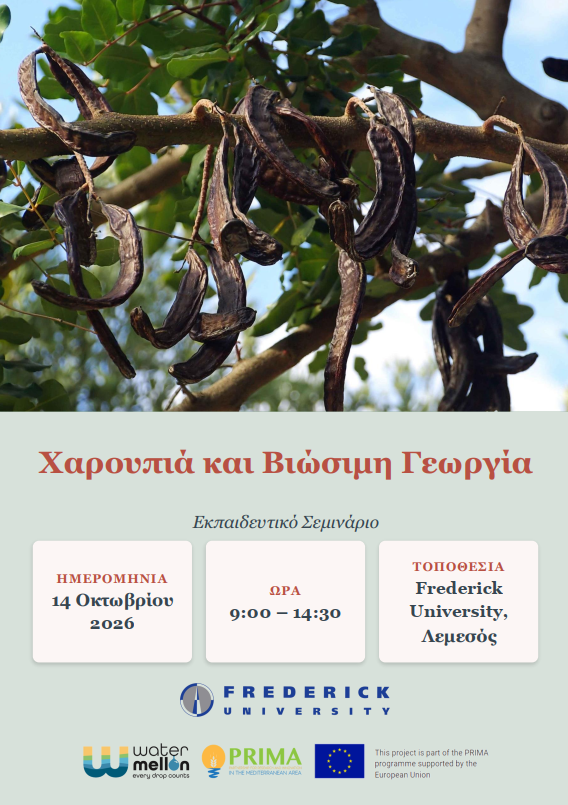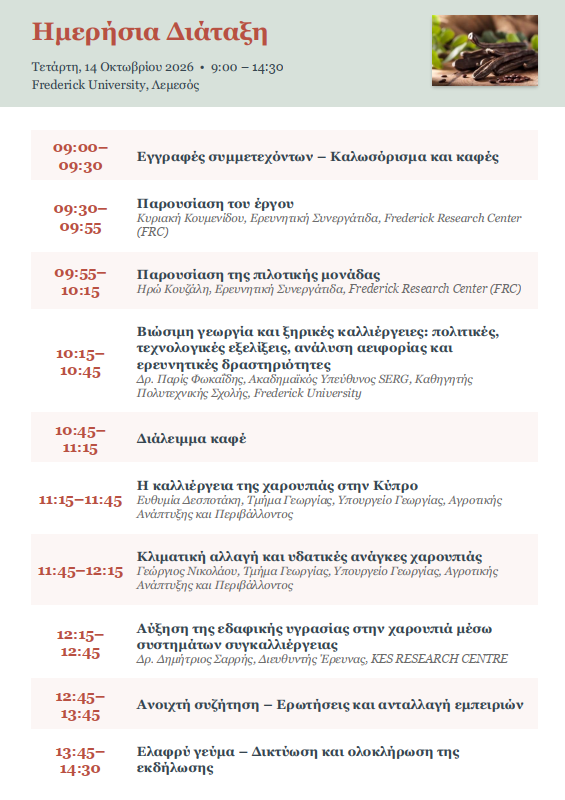

On 14 October 2026, the Sustainable Energy Research Group (SERG) held the training seminar “Carob Trees and Sustainable Agriculture” at Frederick University in Limassol, Cyprus, as part of the Regional Focus Group (RFG) activities of the WATERMELLON PRIMA project.
The seminar aimed to raise awareness among farmers, scientists, researchers and local communities about the WATERMELLON project, sustainable agricultural practices and the potential of carob trees in dry soils and water-scarce conditions. By bringing research and practical knowledge closer to those involved in rainfed agriculture, the event supported knowledge exchange on how to develop more resilient farming systems in Cyprus.
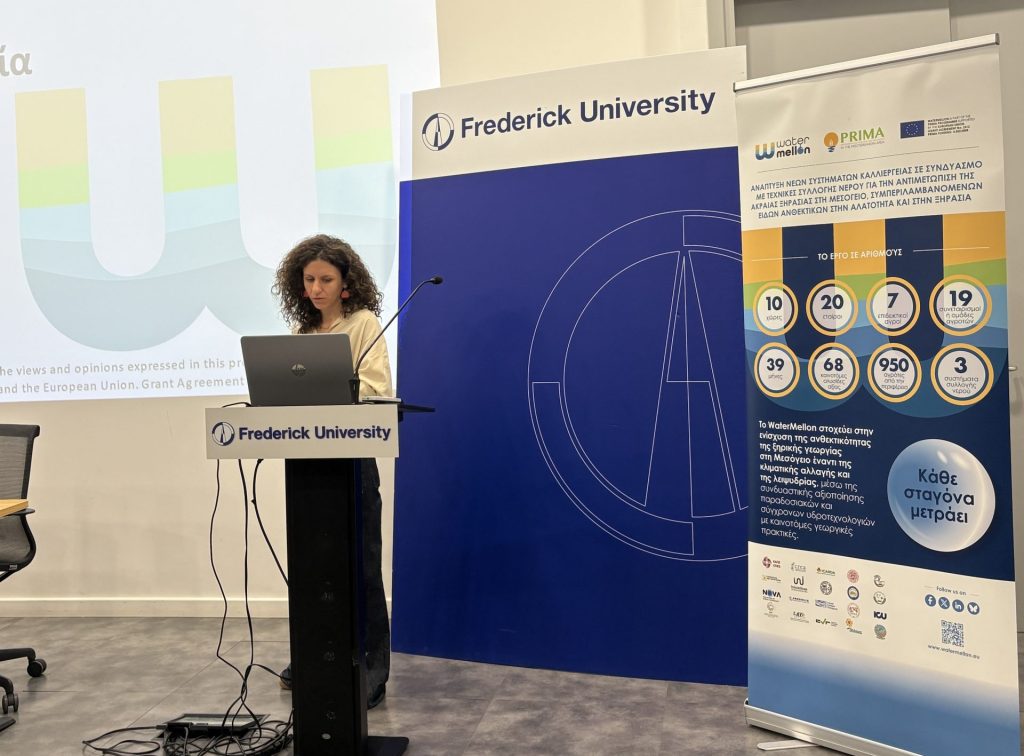
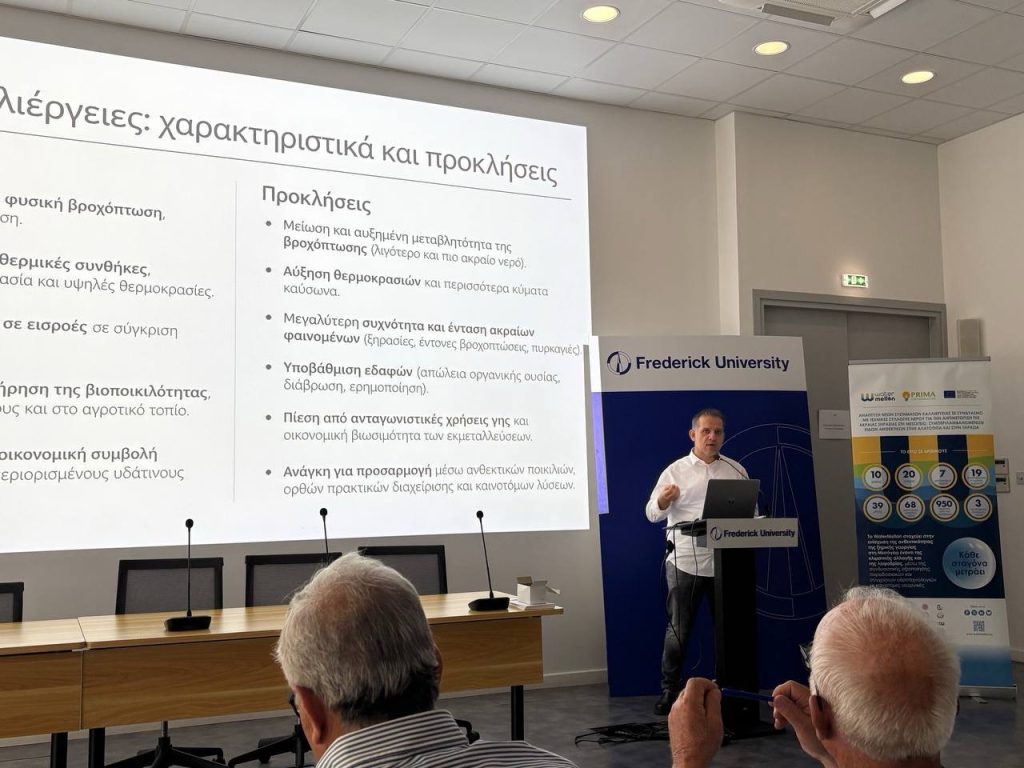
Research and practical approaches to sustainable agriculture
The programme featured presentations from Kyriaki Koumenidou, Iro Kouzali, Prof. Paris Fokaides, Efthymia Despotaki, Georgios Nikolaou, Dr. Dimitrios Sarris and Dr. Sofia Matsi, who shared research findings and practical insights on sustainable agriculture, carob cultivation, climate change and water management.
The sessions covered the WATERMELLON project and its pilot site, sustainable agriculture and rainfed crops, and the cultivation of carob trees in Cyprus. Speakers also addressed the effects of climate change on the water requirements of carob trees and explored how intercropping systems can help increase soil moisture.
The seminar provided an opportunity to discuss the challenges and opportunities associated with carob cultivation under dry conditions, highlighting the importance of agricultural practices adapted to water scarcity and changing climatic conditions.
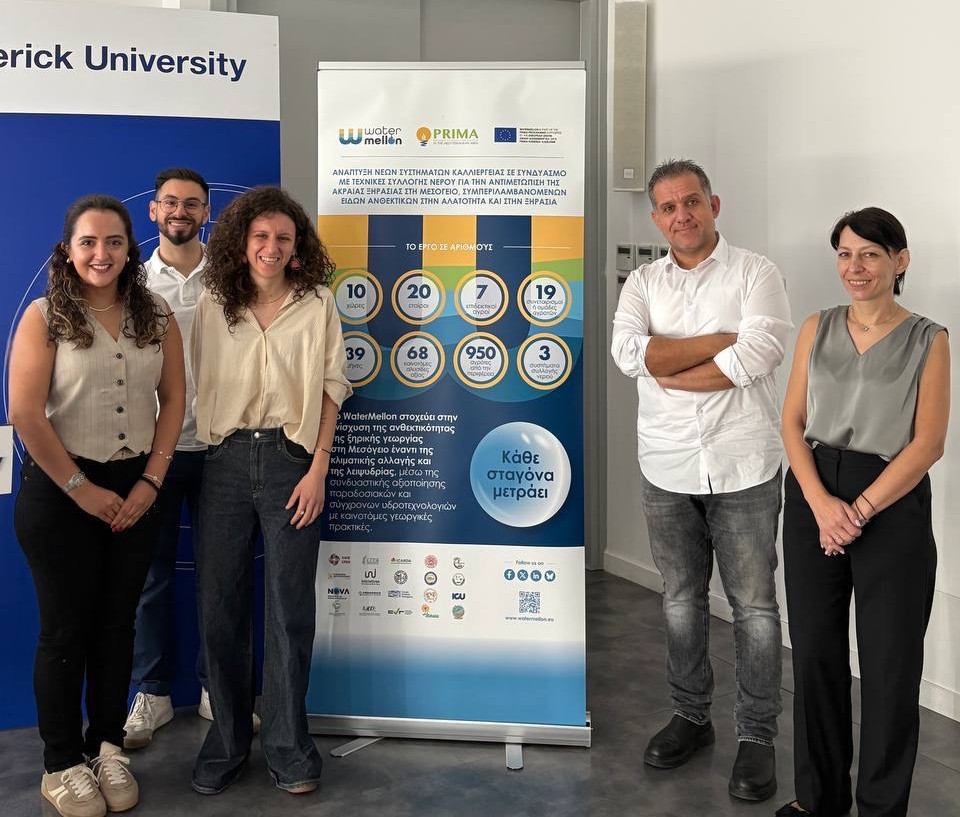
Strengthening climate resilience through knowledge exchange
Carob trees offer potential for agricultural systems facing limited water availability. Sharing research findings and practical experience with farmers and local stakeholders is therefore essential to identify sustainable approaches that can be applied under local conditions.
Through its Regional Focus Group activities, WATERMELLON promotes collaboration between researchers, agricultural professionals and local communities, encouraging the exchange of knowledge and the uptake of innovative practices for more climate-resilient Mediterranean agriculture.
The seminar in Limassol contributed to these objectives by connecting scientific research with the needs of those involved in rainfed farming and by highlighting the role of sustainable carob cultivation in addressing the challenges of climate change and water scarcity.