

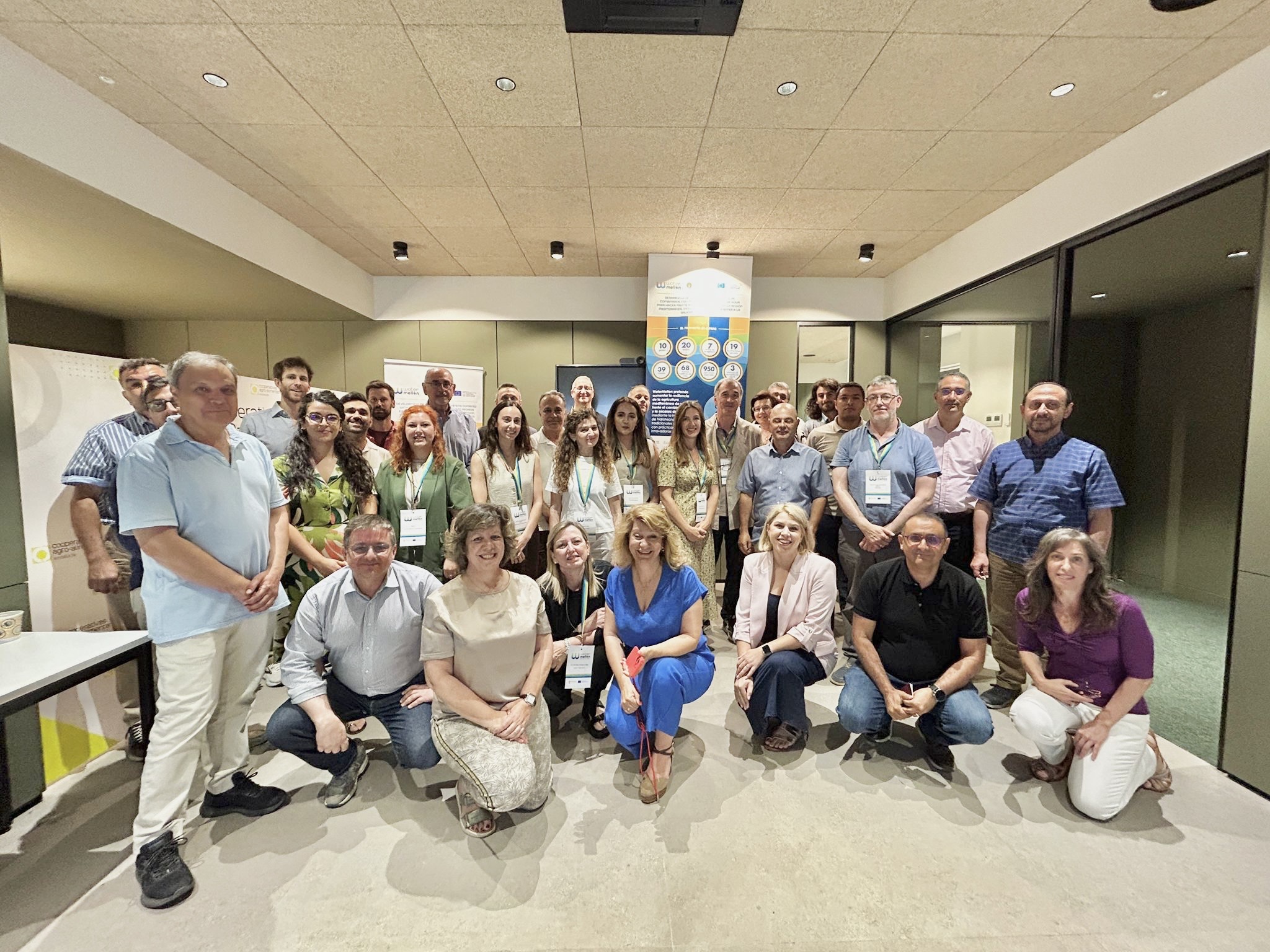
Following the successful international event “Innovating Mediterranean Agriculture”, the WATERMELLON PRIMA consortium gathered in Seville for its project meeting, bringing together all partners to review progress, exchange results, and strengthen collaboration towards more sustainable and resilient agricultural systems in the Mediterranean region.
Hosted at the facilities of Cooperativas Agro-alimentarias de Andalucía, the consortium meeting provided a valuable space for technical discussions, knowledge exchange, and strategic planning. Representatives from the 20 partner organisations across 10 Mediterranean countries participated in the sessions, continuing the collaboration and dialogue initiated during the international event held the previous day.
The meeting was opened with a warm welcome from project coordinator Dr. Efthymia Alexopoulou from the Centre for Renewable Energy Sources and Saving (CRES), who highlighted the strong cooperation established among partners since the beginning of the project in March 2025.
During the sessions, partners reviewed the progress of key project activities, including the Farmers Engagement Work Package, led by UNIBO. Discussions focused on strengthening the connection between research outcomes, communication activities, and the future uptake of WATERMELLON PRIMA results.
The consortium also assessed the latest advances from experimental trials carried out across different Mediterranean regions. Researchers shared updates on water-saving systems, innovative water harvesting solutions, and novel cropping approaches designed to improve agricultural efficiency and climate resilience.
Particular attention was given to alternative cropping systems, including annual and perennial crops, and their role in supporting more sustainable farming practices under Mediterranean conditions. Partners exchanged knowledge on crop performance, field experiences, and adaptation strategies, contributing to a shared understanding of how innovation can respond to water scarcity challenges.
The meeting also explored the identification of novel value chains, focusing on how project results can be transformed into practical opportunities for farmers, agricultural communities, and other stakeholders.
As part of the programme, partners participated in a field visit to La Campiña Cooperativa in Lebrija, where they visited a quinoa demonstration site. The visit created a direct link between research and agricultural practice, allowing participants to discuss crop management, local experiences, and lessons learned from quinoa cultivation across Mediterranean areas involved in the project.
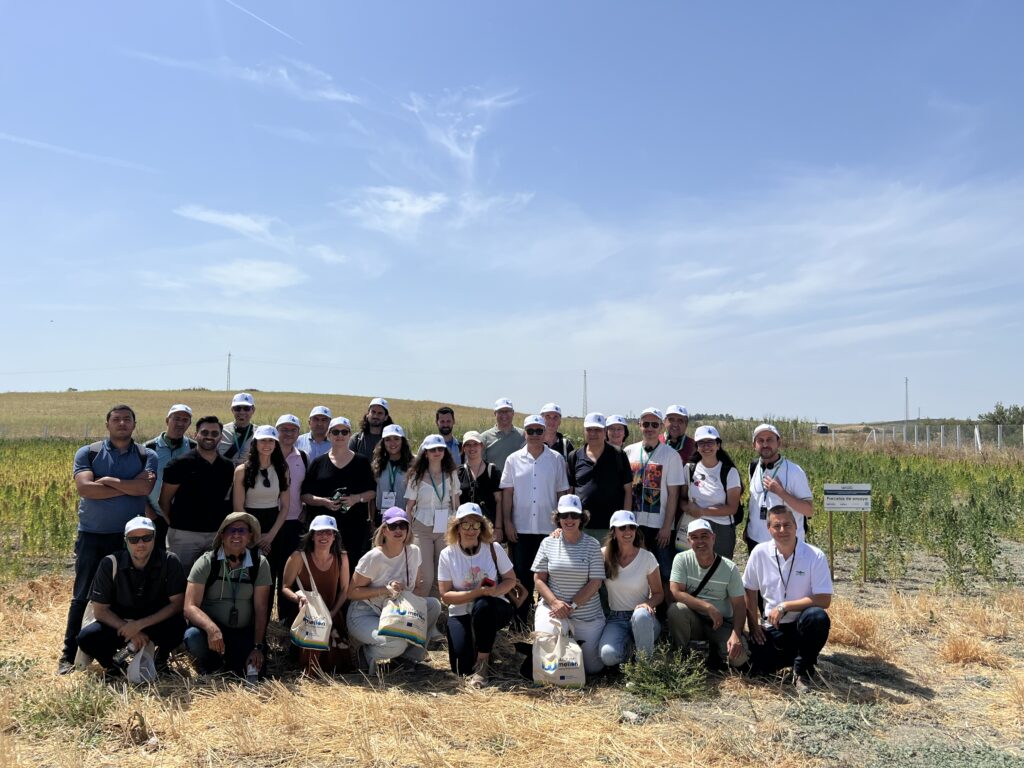
Image: field visit to La Campiña Cooperativa in Lebrija
The field activity included valuable contributions from researchers and local agricultural experts, fostering an open exchange of knowledge despite the challenging weather conditions.
The Seville meeting reinforced the WATERMELLON PRIMA consortium’s commitment to turning innovation into practical solutions and supporting a more sustainable, water-efficient, and resilient Mediterranean agriculture.