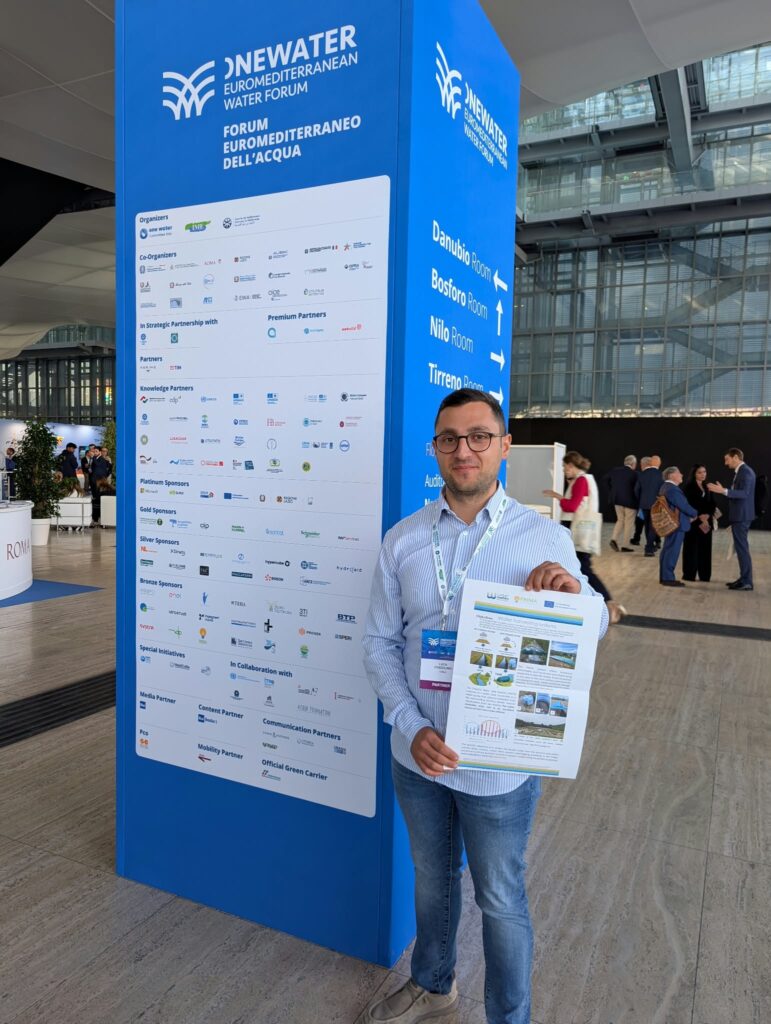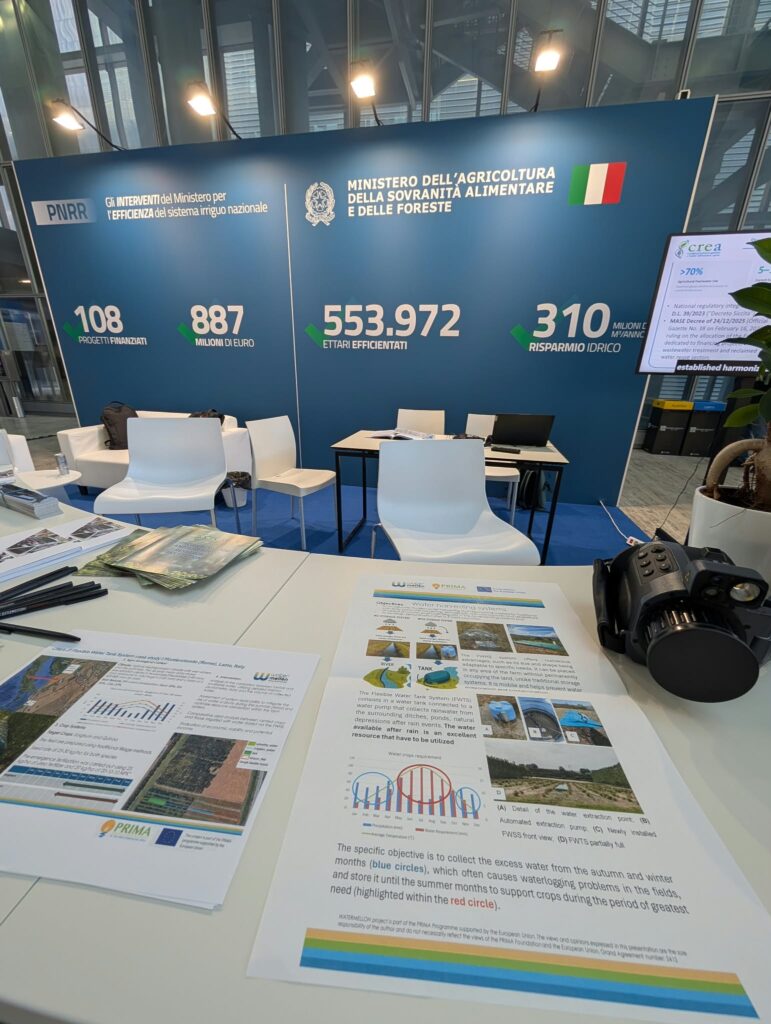

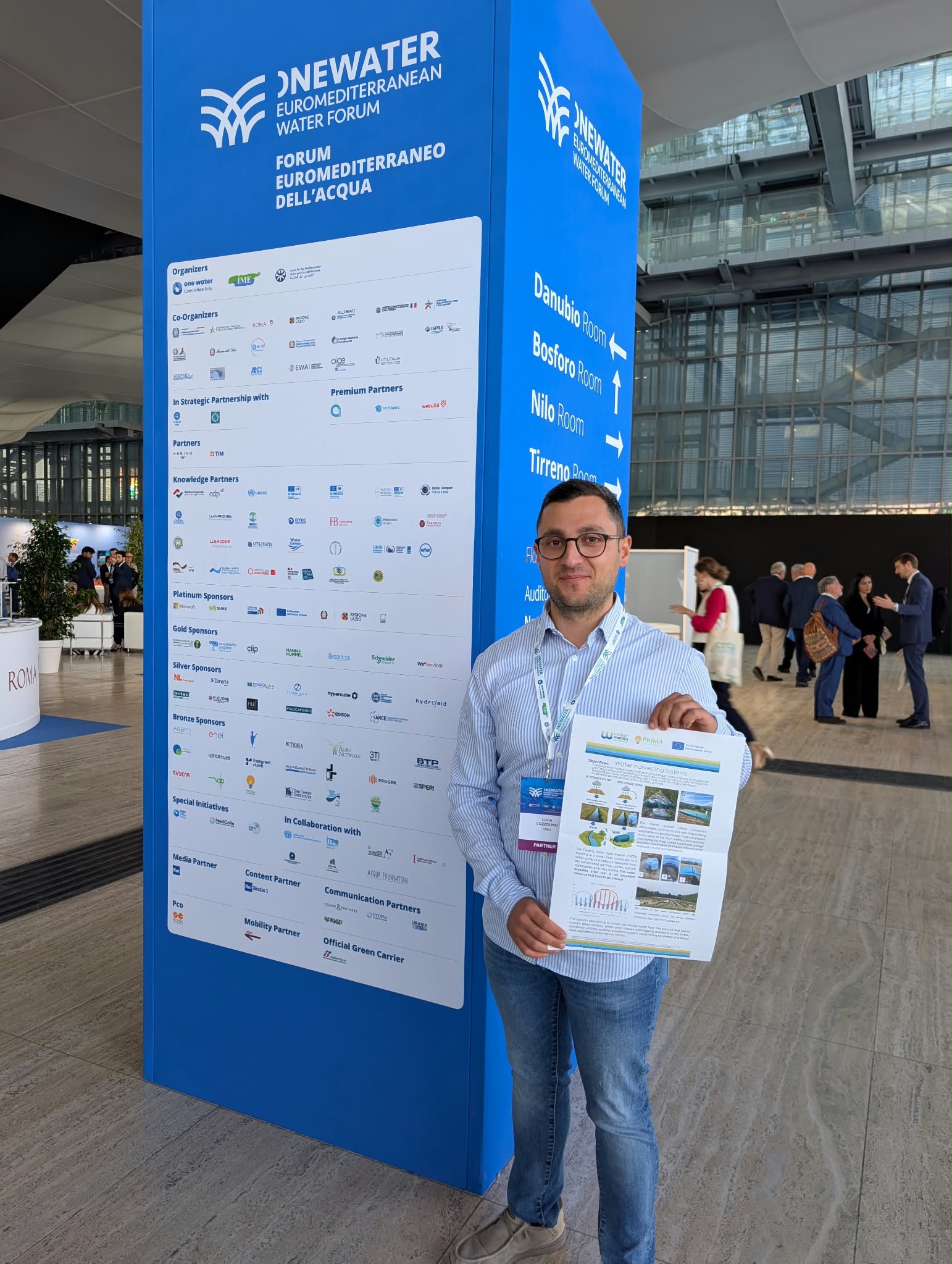
At the EUROMED Water Forum 2026, held at La Nuvola – Roma Convention Center, the Research Centre for Engineering and Agro-Food Processing (CREA IT) represented the PRIMA-funded project WATERMELLON. During the dedicated session “Pioggia per irrigare” (Rainwater for Irrigation) on September 30, CREA IT presented its Italian case study located in Monterotondo (Rome), demonstrating how ancient Mediterranean rainwater harvesting principles can be integrated with modern engineering.
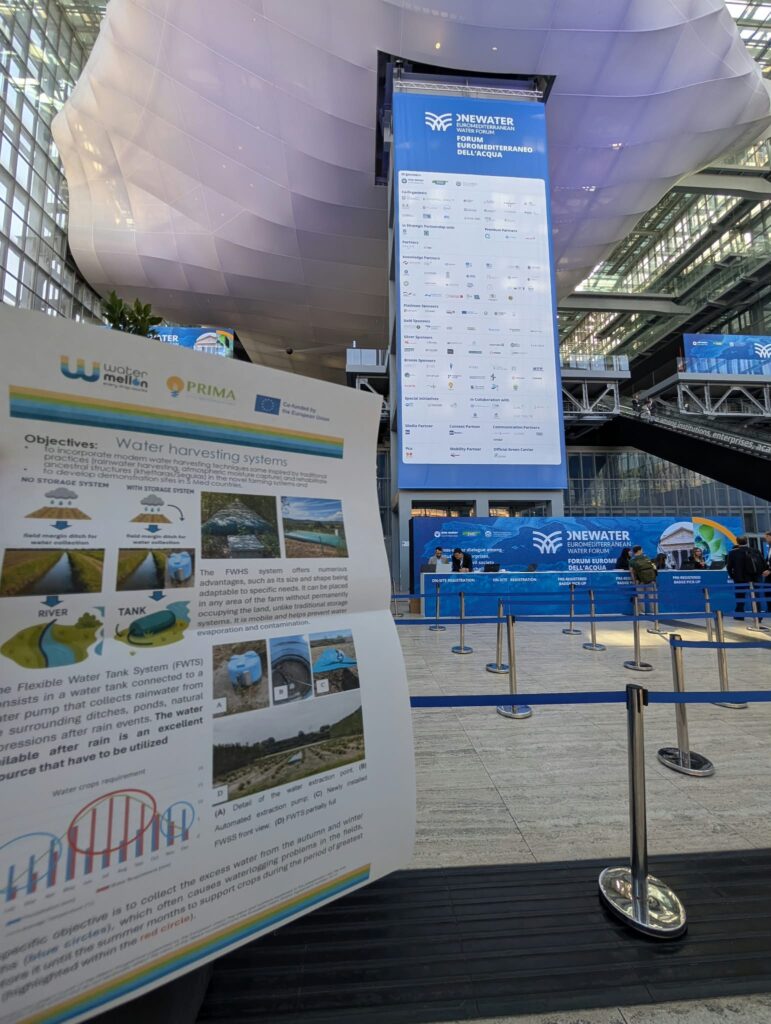
The presentation focused on the implementation of the Flexible Water Tank System (FWTS), an innovative runoff collection and temporary storage technology. The system utilizes automated water pumps to extract excess surface runoff from surrounding field margin ditches, ponds, and natural depressions during high-precipitation autumn and winter months. By capturing runoff that typically causes field waterlogging or is lost downstream, the FWTS stores water to supplement crop requirements during peak summer droughts, mitigating water scarcity risks.
Key technical and operational advantages of the Flexible Water Tank System highlighted include:
- High Adaptability & Mobility: Customisable sizes and shapes that easily fit farm layouts without permanently occupying productive land or requiring rigid infrastructure.
- Resource Preservation: Sealed storage structure that prevents evaporation losses and minimizes biological or chemical water contamination compared to open reservoirs.
- Crop Resilience & Economic Viability: Targeted irrigation application during dry spells to support target crops (such as sorghum and quinoa), comparing rainfed versus irrigated yields to optimize water-use efficiency and economic returns for Mediterranean farming systems.