

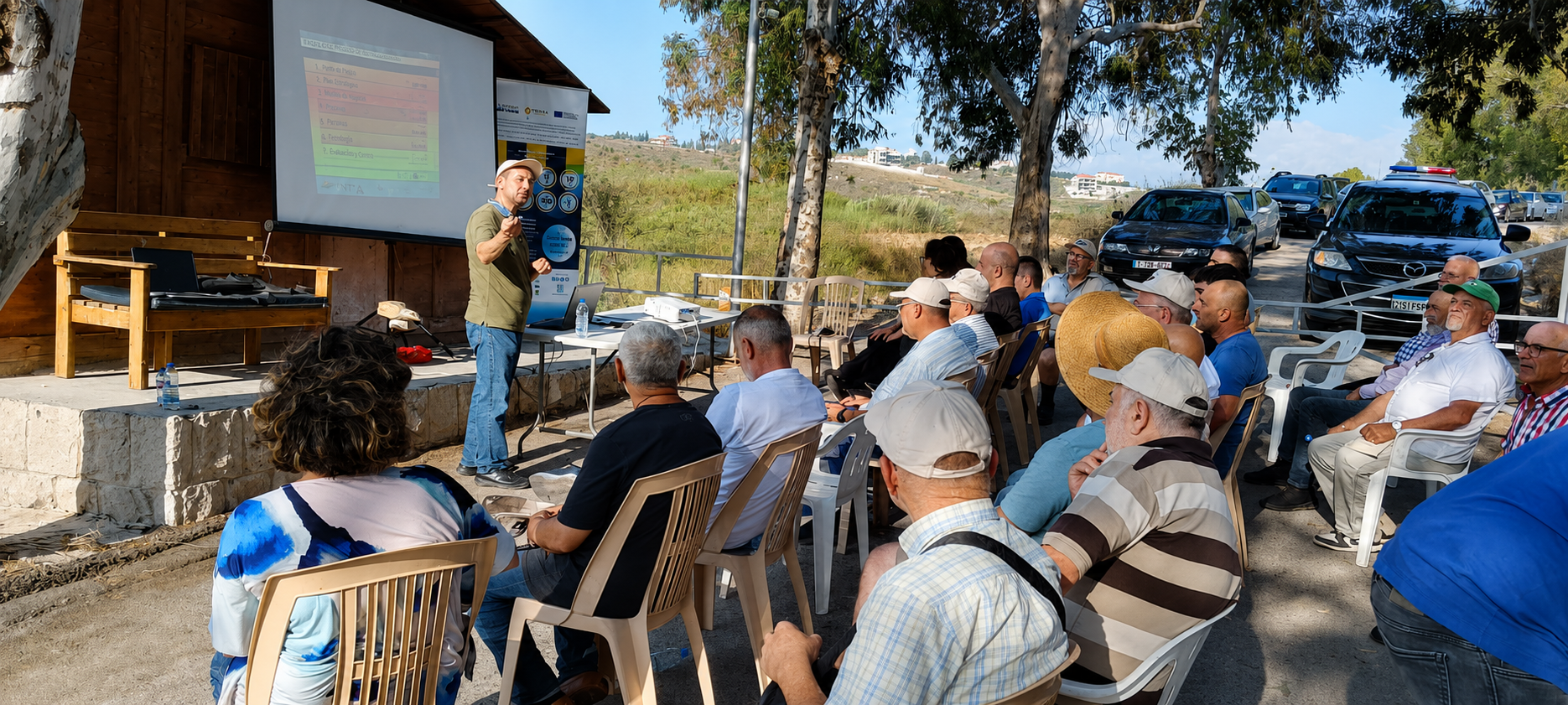

On 17 July 2026, the WaterMellon project held a Living Lab on Drought-Tolerant Crops in KfarHazir (Koura, North Lebanon), bringing together 26 participants, including local authorities, farmers, agricultural cooperatives, engineers, technicians, representatives from the private sector, and the Ministry of Agriculture.
The event was organised by ICU, in collaboration with the Ministry of Agriculture Agricultural Centre in Koura and the Municipality of KfarHazir, with the aim of sharing the first results of the project’s field trials on quinoa and teff—two crops with strong potential to improve agricultural resilience under increasing water scarcity and climate change.
The Living Lab opened with a welcome address from the Head of the Ministry of Agriculture Centre in Koura, who highlighted the importance of introducing innovative and climate-resilient crops to support the future of agriculture in North Lebanon.
During the first session, the WaterMellon team presented the project’s approach to climate-smart agriculture, introducing the PRIMA-funded initiative, the Lebanese pilot sites, and the reasons behind their selection. Participants also learned about the characteristics of quinoa and teff, the cultivation practices applied during the first growing season, the main achievements and challenges encountered, and the lessons learned that will guide the next production cycle.
The event continued with an interactive discussion, where farmers, local stakeholders and technical experts exchanged experiences, raised questions and identified opportunities for future collaboration within the WaterMellon Living Lab community.
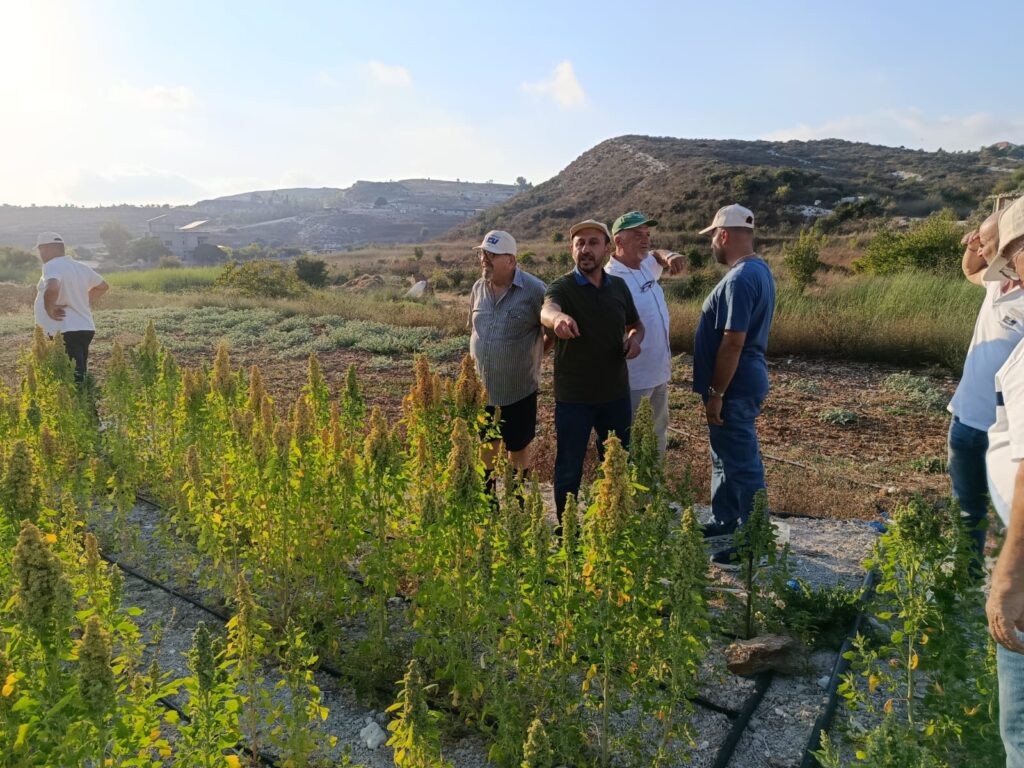
The practical part of the event took place at the nearby demonstration fields in KfarHazir, where participants visited both rainfed and drip-irrigated trial plots. This field visit allowed them to observe crop performance first-hand and discuss the preliminary findings with the project team.
The event also provided encouraging feedback on the potential uptake of these innovative crops. Of the 20 participants who completed the evaluation questionnaire, all reported an improved understanding of climate-smart agriculture and the role of drought-tolerant crops. Notably, 13 participants expressed their willingness to adopt quinoa, provided that the final trial results confirm its suitability under local conditions. In addition, around 75% of respondents showed interest in joining a stakeholder group to continue following the project’s activities and future trial results.
These first outcomes demonstrate the value of the Living Lab approach in fostering knowledge exchange, stakeholder engagement and the co-creation of practical solutions for more resilient agricultural systems. As the WaterMellon project moves into the next growing season, the Lebanese pilot will continue to generate valuable evidence to support the adoption of sustainable farming practices across Mediterranean regions.