


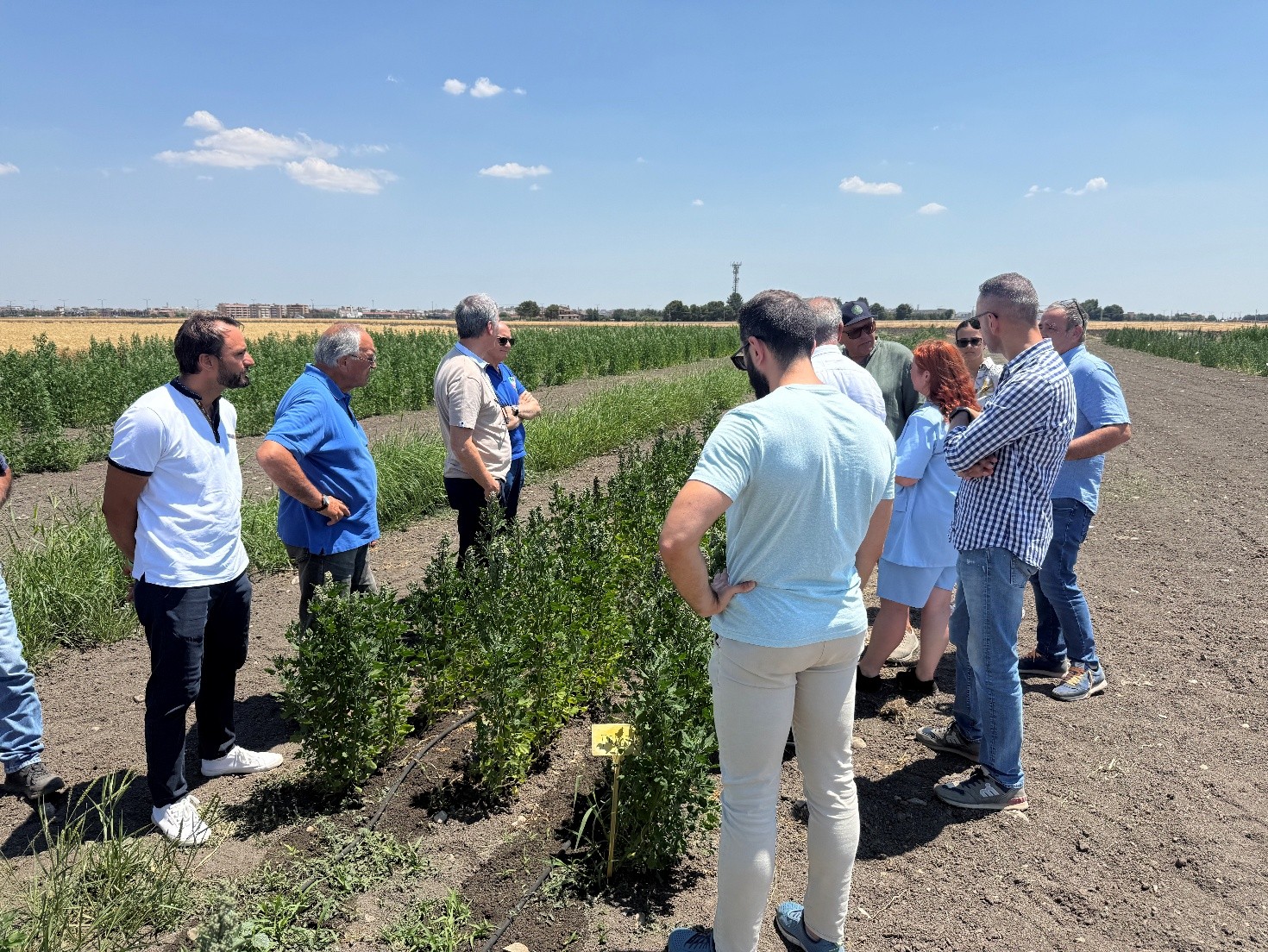
On 26 June 2026, CREA-CI (Foggia, Italy) hosted the Living Lab “Quinoa in Resilient Mediterranean Farming Systems” as part of the PRIMA WaterMellon project. The event brought together researchers, farmers, technicians and other key stakeholders to exchange knowledge, strengthen collaboration, and explore the potential of quinoa as a resilient crop for Mediterranean agriculture.
The Living Lab welcomed 25 participants, the majority of whom were farmers, and combined project presentations, interactive discussions and a field visit to CREA-CI’s experimental quinoa plots. Following the Living Lab methodology, participants actively contributed their knowledge and experience, fostering the co-creation of innovative solutions to support climate-resilient farming systems.
During the opening session, Michele Rinaldi (CREA-CI, Principal Investigator for CREA in the WaterMellon project) introduced the project’s objectives, highlighting its integrated approach to improving the Water-Energy-Food Nexus through innovative farming systems and water harvesting techniques. He also emphasized the importance of evaluating agronomic, environmental and economic sustainability to ensure the long-term viability of proposed solutions.
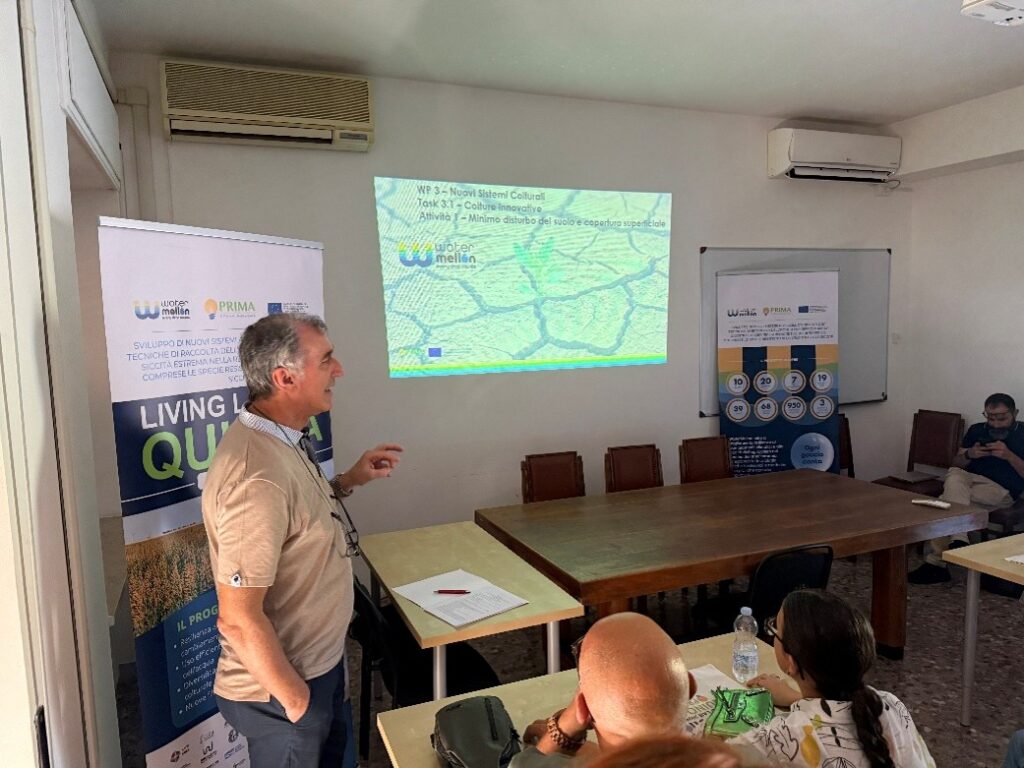
Photo credit: CREA
Danilo Marandola (CREA-PB) presented the project’s participatory methodology, explaining how Living Labs help bridge the gap between scientific research and farmers’ practical needs by encouraging continuous dialogue and collaboration.
The experimental activities carried out at CREA-CI were presented by Emanuela Infantozzi (PhD student, University of Basilicata), who illustrated the potential of quinoa as a drought- and salinity-tolerant crop suitable for conservation agriculture. Current field trials are assessing the crop’s adaptation to Mediterranean environments, its water-use efficiency, and its integration into sustainable cropping systems.
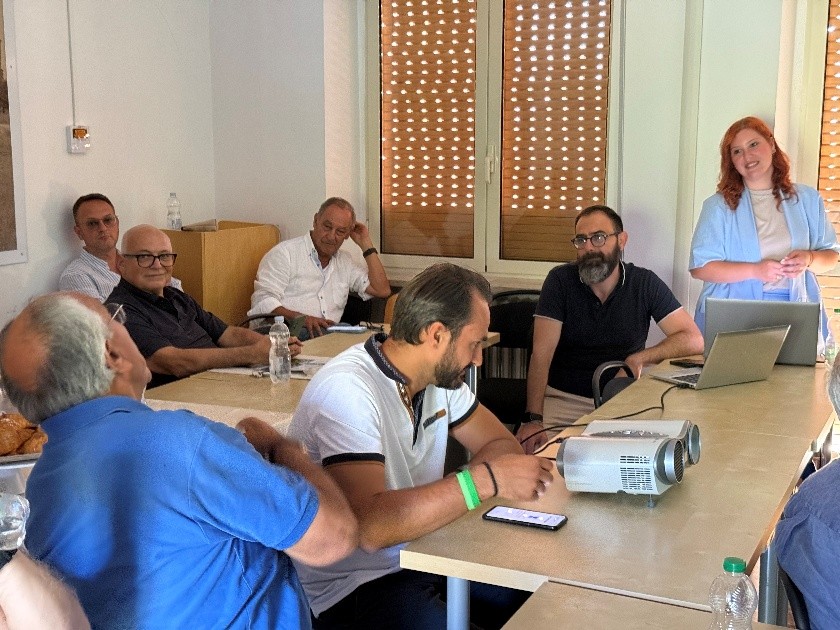
Photo credit: CREA
The discussion also addressed the main challenges associated with quinoa cultivation, including agronomic management, varietal adaptation and the creation of a complete value chain—from seed production to processing and marketing. Complementary conservation agriculture practices, such as crop rotation, minimum tillage and crop residue management, were presented by Francesco Ciavarella (PhD student, University of Foggia) as effective strategies to improve soil water retention and enhance resilience to climate change.
The event concluded with a stakeholder questionnaire, which revealed a strong awareness of climate change, with participants assigning an average concern score of 4.5 out of 5. The results highlighted several priorities for supporting quinoa adoption in Mediterranean cereal systems, including:
- validated agronomic protocols;
- improved irrigation management;
- varieties better adapted to Mediterranean conditions;
- economic assessments of quinoa production;
- the development of an organised quinoa value chain;
- additional demonstration activities; and
- stronger collaboration among researchers, farmers, advisors and agri-food stakeholders.
Participants agreed that the successful integration of quinoa into Mediterranean farming systems will depend not only on continued scientific research but also on the establishment of a sustainable and well-organised market chain.
The Living Lab also attracted local media attention, with coverage published in the newspaper L’Attacco, while a technical article describing the initiative is currently in press in the national agricultural journal Terra e Vita.