


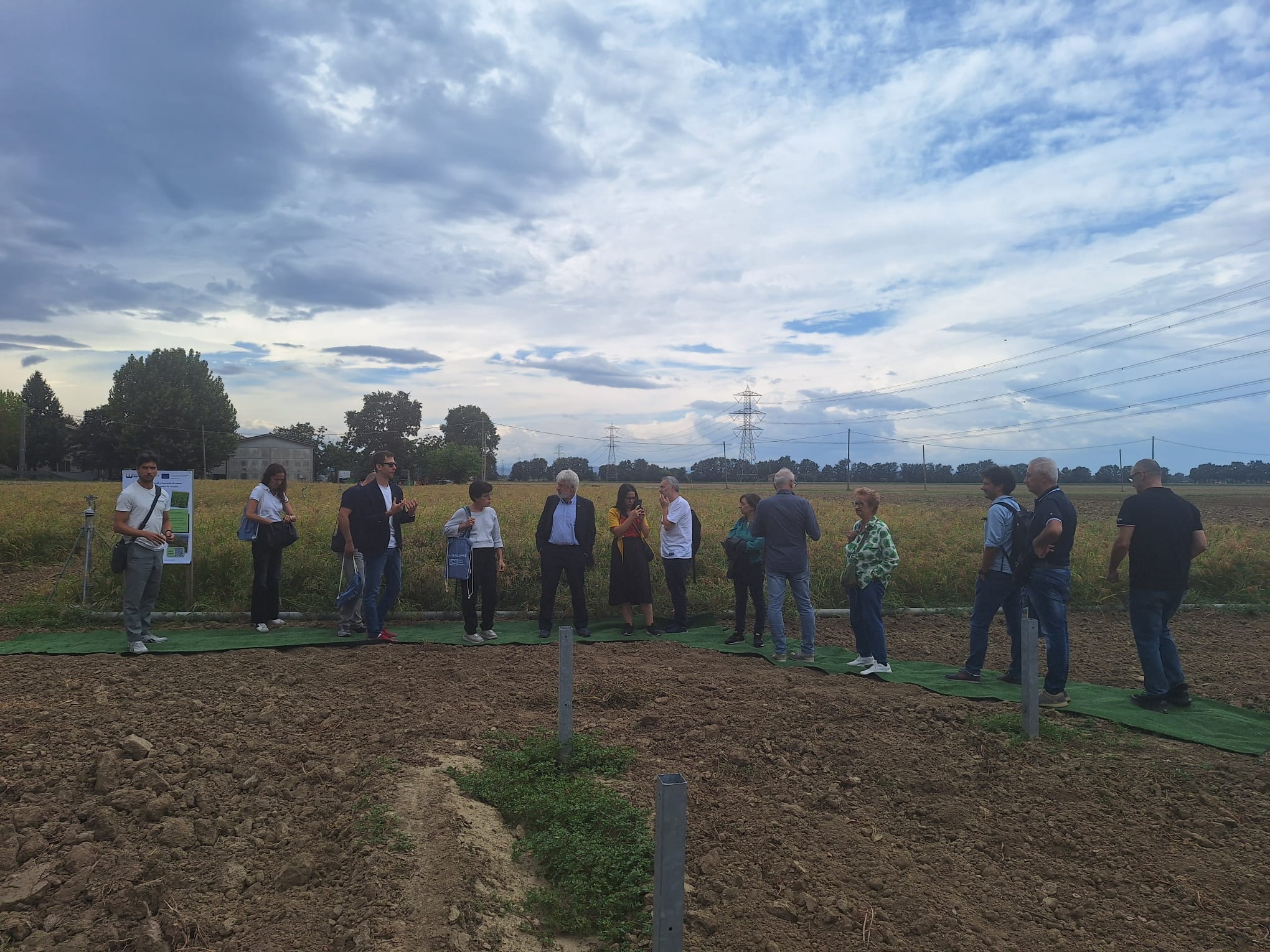

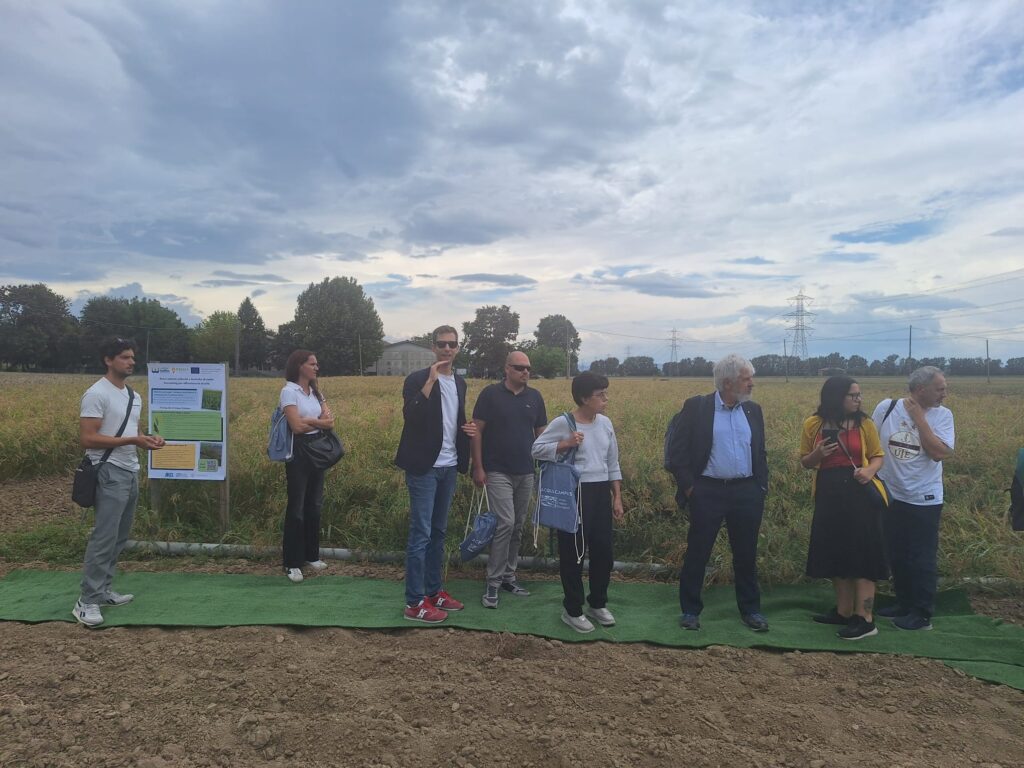
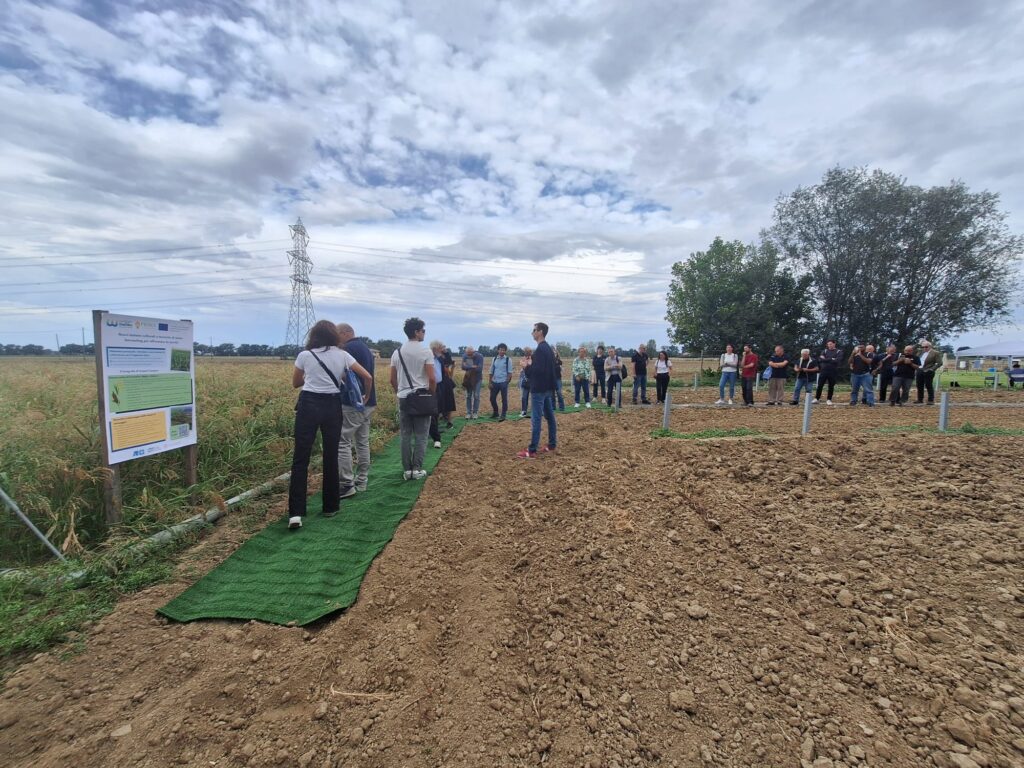
On September 22nd, our partner Canale Emiliano Romagnolo (CER) held a workshop at Aqua Campus where they presented the WATERMELLON PRIMA project and organised a meeting with the Regional Farming Group. They also had a visit to the experimental fields, organised together with the University of Bologna (Alma Mater Studiorum – Università di Bologna). During this visit, the colleagues from UNIBO presented insights into millet cultivation, and explained its integration with a water harvesting solution.
In case you want to see the presentation, please click on the following link.

Context and Challenges
-
Climate pressures in Emilia-Romagna:
-
Rising temperatures: +1.5–2.0 °C.
-
More frequent, longer, and intense heatwaves.
-
Extreme weather: floods and heavy rains (May 2023, Sept 2024).
-
Drought impacts: low Po River levels and saltwater intrusion (2021–2022).
-
-
Agricultural needs:
-
Growing water demand for crops.
-
Necessity of efficient irrigation to safeguard food production and ecosystems.
-
Objectives
-
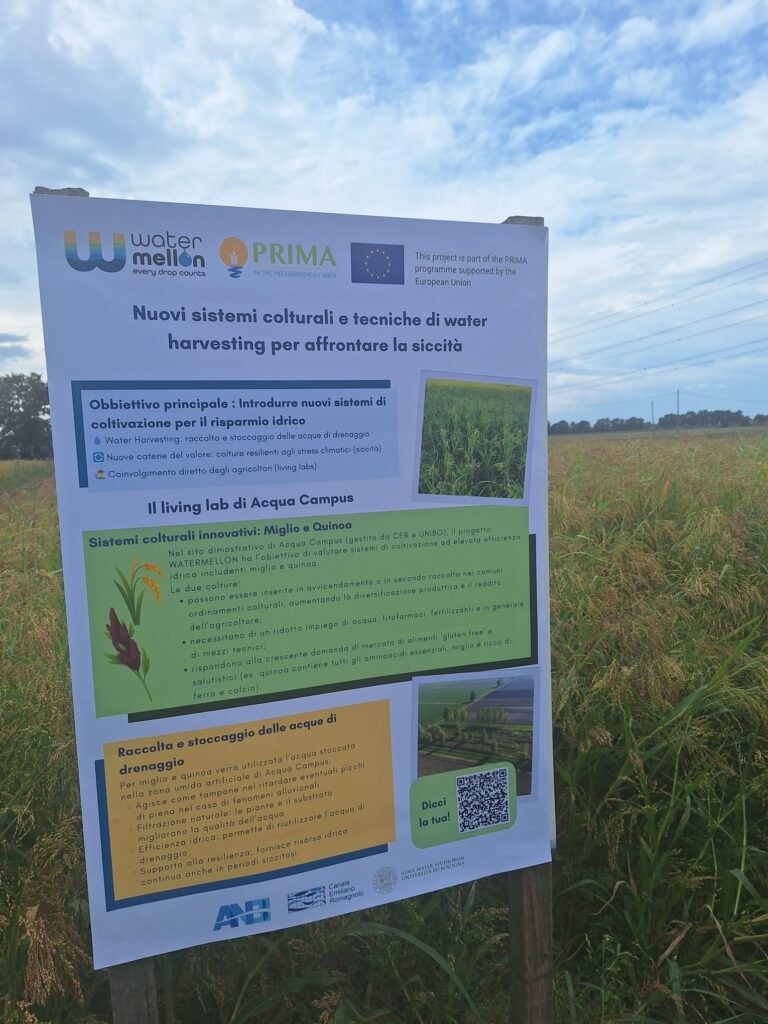
Introduce innovative cultivation systems for water savings.
-
Promote Water Harvesting (collection and storage of drainage water).
-
Develop new value chains with resilient crops adapted to climate stress (drought).
Opportunities with New Crops
-
Miglio (millet) & Quinoa:
-
Can be included in crop rotations or as second harvests.
-
Benefits:
-
Enhance production diversification.
-
Resilient, rustic crops.
-
Economic potential and response to growing gluten-free demand.
-
Nutritional advantages (quinoa: amino acids; millet: iron and calcium).
-
-
-
Existing Italian supply chains:
-
Miglio: Dr. Schär (100% Italian chain by 2026), EcorNaturaSì, Molino Rossetto.
-
Quinoa: Quinn, Quinoa Italia.
-
-
Market outlook:
-
Current CAGR: 4.2%.
-
Expected CAGR: 15.6%.
-
Water Resource Innovation
-
Use of artificial wetland (Acqua Campus) for sustainable irrigation:
-
Stores water for millet and quinoa cultivation.
-
Provides flood buffering by delaying flood peaks.
-
Natural filtration improves water quality.
-
Ensures continuous water availability in drought periods.
-
Contributes to aquifer recharge and nitrate reduction.
-
Key Message
The presentation emphasizes the urgency of climate adaptation in agriculture through:
-
Efficient water management.
-
Integration of climate-resilient, gluten-free crops (millet & quinoa).
-
Use of nature-based solutions (wetlands, water reuse) to enhance resilience, sustainability, and new economic opportunities.