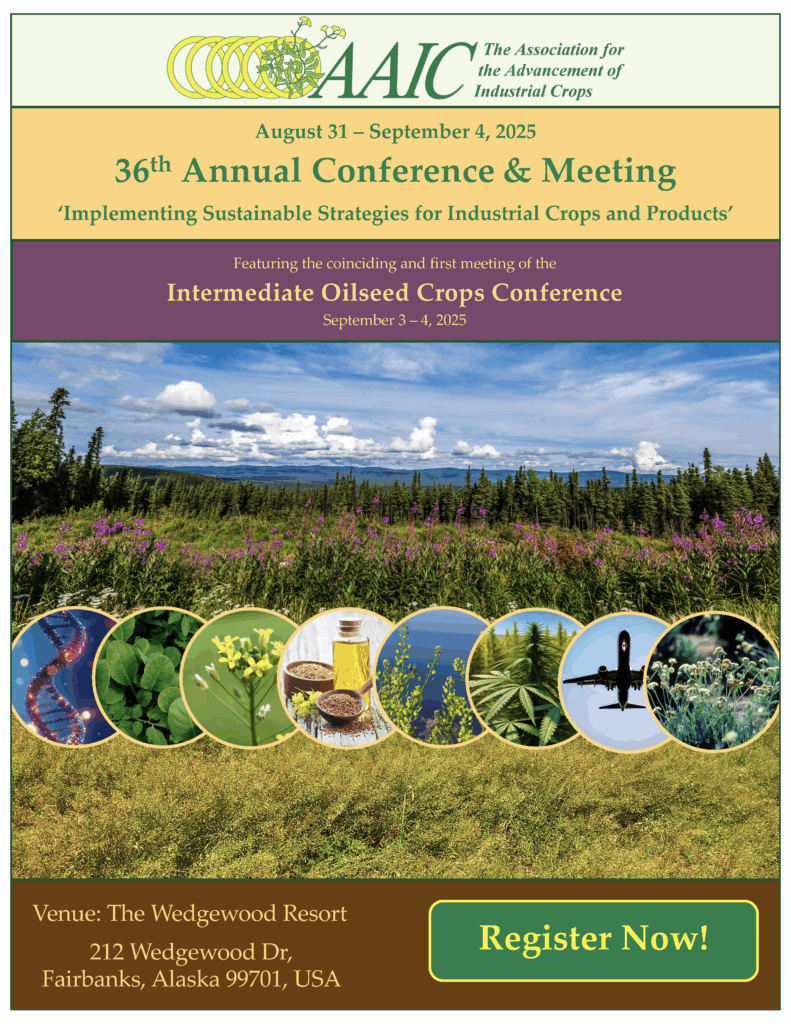



The first week of September, our partner Eleni Papazoglou, from the Agricultural University of Athens, presented a poster titled “Underutilized Climate-Resilient Cereals in Sustainable Farming: The Emerging Potential of Quinoa, Teff, and Tritordeum” at the 36th Implementing Sustainable Strategies for Industrial Crops and Products (AAIC) conference held in Alaska, USA.
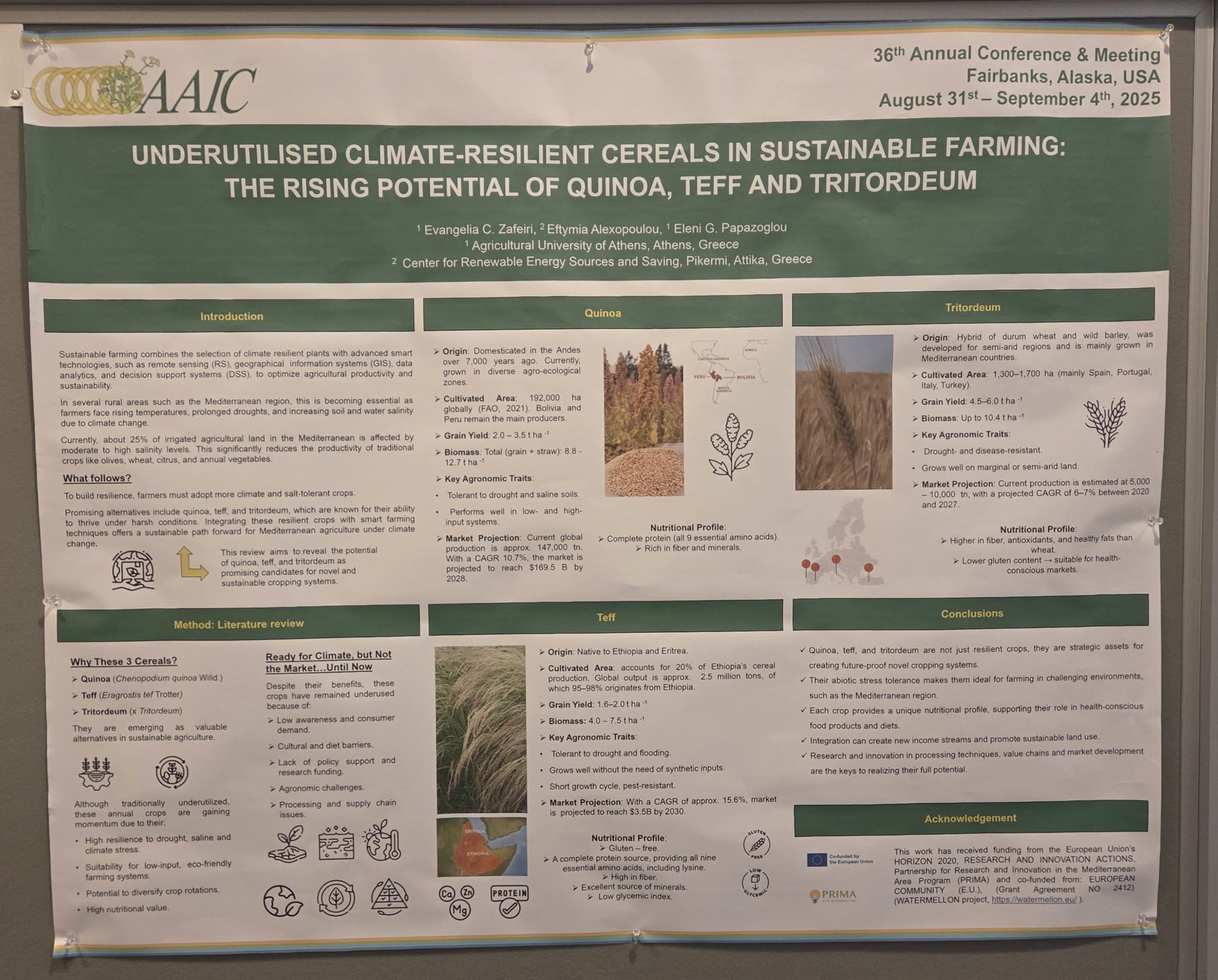
Global agriculture faces unprecedented challenges due to climate change, including reduced crop yields, increased frequency of droughts and floods, and soil degradation. To ensure food security, it is essential to integrate climate-resilient crops that combine high nutritional quality with the ability to thrive under adverse environmental conditions. This paper highlights three underutilized cereals—quinoa (Chenopodium quinoa Willd.), teff (Eragrostis tef), and tritordeum (a hybrid between durum wheat and wild barley)—that offer promising opportunities for sustainable agriculture. Through a review of the literature, we explore their agronomic characteristics, nutritional benefits, and potential role in diversifying farming systems and strengthening food security.
Introduction
Sustainable farming requires the integration of crops capable of withstanding climate variability while supporting human nutrition. The dominance of a few staple crops—primarily wheat, maize, and rice—has created vulnerability in food systems, as these species are highly sensitive to environmental stressors. Crop diversification using underutilized species can increase resilience, reduce risks, and promote ecological balance.
Quinoa, teff, and tritordeum are particularly promising due to their adaptability to marginal environments and their exceptional nutritional profiles. These cereals not only offer alternatives for farmers in challenging climates but also provide health benefits to consumers, making them valuable for both agroecological sustainability and nutritional security.